June 12, 2026·2 min read
What a real headlight restoration includes
Restoration is not a wipe. We mask, cut the oxidation, polish to optical clear, and seal the plastic so the light stays on the road.
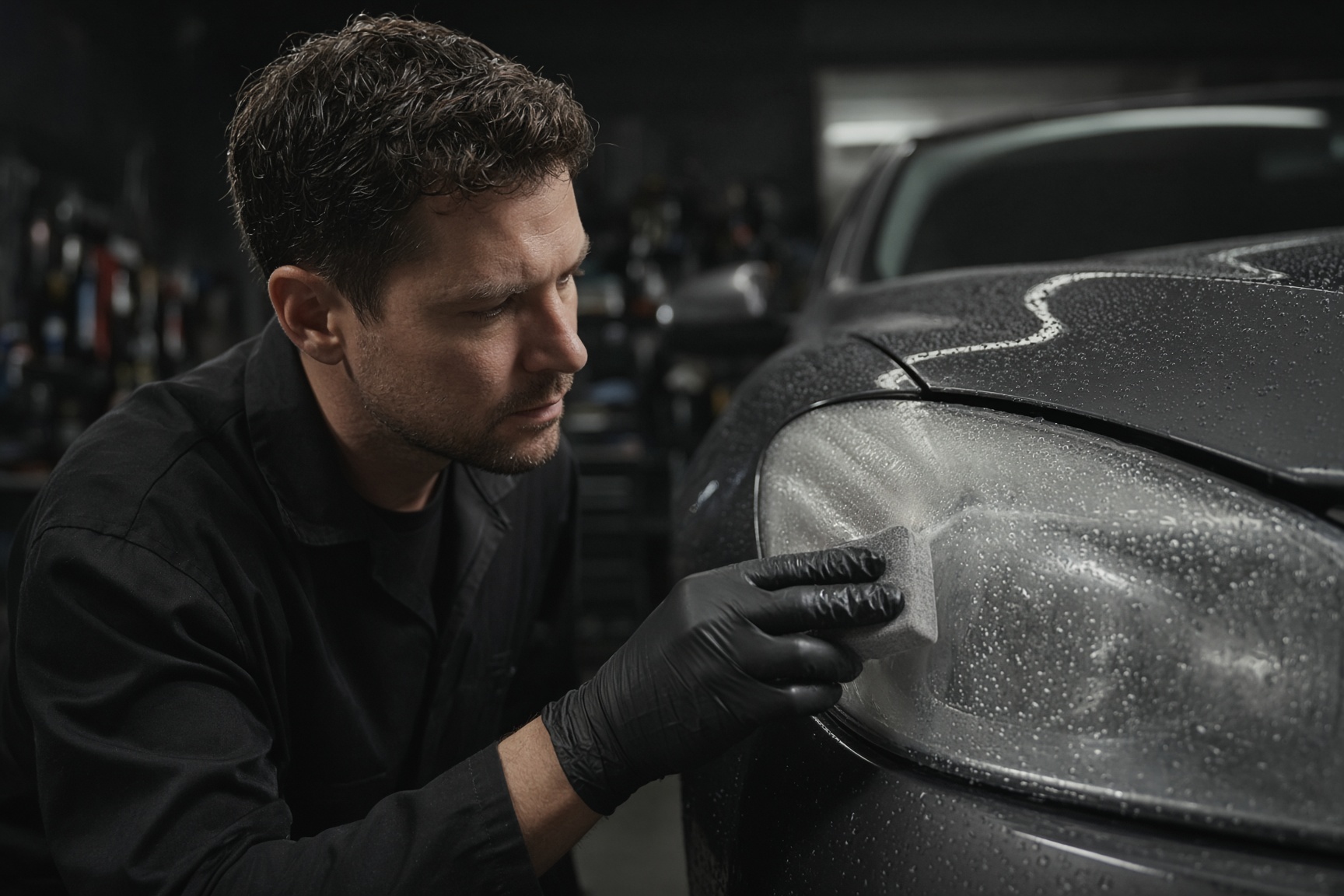
People search “headlight restoration” and “restauración de focos” for the same job: take yellowed, oxidized lamps and make them clear again — and keep them that way. The method is the same in English or Spanish. The coat is what decides whether it lasts.
The four steps we actually do
- Mask and inspect. Tape the paint. Check for cracks, moisture, and broken tabs. If it is not a restoration, we say so.
- Cut the oxidation. Wet sanding removes the yellowed, pitted layer of polycarbonate. This is the part kits skip.
- Polish to optical clear. Compound and finish until the lens is glass-like and the reflector reads sharp.
- UV ceramic seal. A protective coat that blocks the sun that caused the damage. This is what makes the job hold.
Most pairs take the better part of an hour to an hour and a half. Heavy oxidation, fog lamps, or extra corners add time. We confirm after we see the vehicle — photos first, then a time.
How to book
Use the form on this site with your name, phone, and year-make-model. That goes on our booking list. Text photos of both lamps to 620-481-5700 if you have them. We answer in English or Spanish and confirm where to meet. We do not quote a number until we have seen the lenses.
If the plastic is intact, restoration is almost always the faster, cheaper path than a new assembly. If it is not intact, we will tell you to replace it. Either way you are not guessing from a kit bottle.
Ready to clear the lamps?
Send the car. Text photos of the lamps. We serve 67801 and nearby.
Book a restoration