August 5, 2026·2 min read
Cloudy headlights steal night vision
In daylight a yellow lamp just looks old. After dark it is a safety problem: the light never makes it down the road.
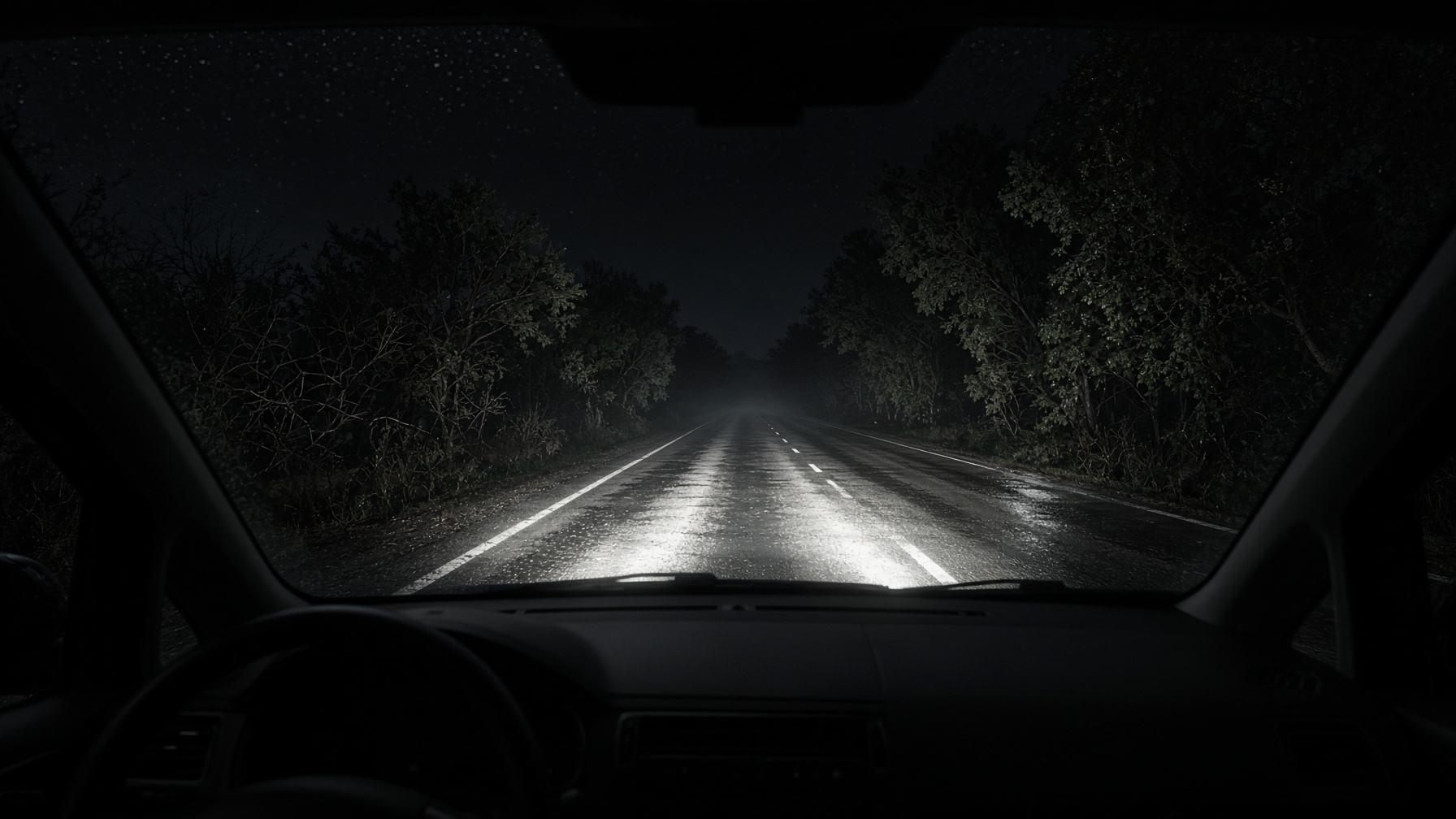
Headlights are aimed and engineered around a clear lens. The cutoff, the hot spot, the distance — all of that assumes the plastic in front of the bulb is still a window. When that window turns to haze, the lamp is doing the same work into a fogged filter.
You feel it first on unlit roads and in rain. The beam looks bright right in front of the bumper and weak farther out. Oncoming lights smear. Wet pavement throws glare back at you. None of that is “getting older.” It is scatter from pitted, yellowed polycarbonate.
Why the car looks dimmer even with new bulbs
Swapping bulbs or LEDs into a cloudy housing does not fix the window. A brighter source behind oxidized plastic often makes the glow in front of the car worse. You spend the upgrade and still cannot see the shoulder. Restore the lens first. Then the beam the lamp was designed to throw actually leaves the housing.
Inspection-day and everyday driving
Hazy lamps get flagged because they are not putting a legal pattern on the road. Even where nobody measures the beam, you are the one driving it at 10 p.m. Restoration is the fastest way to put light back where the engineers aimed it — without waiting on a new assembly.
- Clear the lens so the projector or reflector can actually aim.
- Seal it against UV so the haze does not return with the next summer.
- Send night-time photos if you have them — yellow in daylight is even louder after dark.
If you are booking a pair, mention how the car is parked. A driveway that faces west cooks the lamps faster. We will still treat both sides the same so the beam matches.
Ready to clear the lamps?
Send the car. Text photos of the lamps. We serve 67801 and nearby.
Book a restoration